

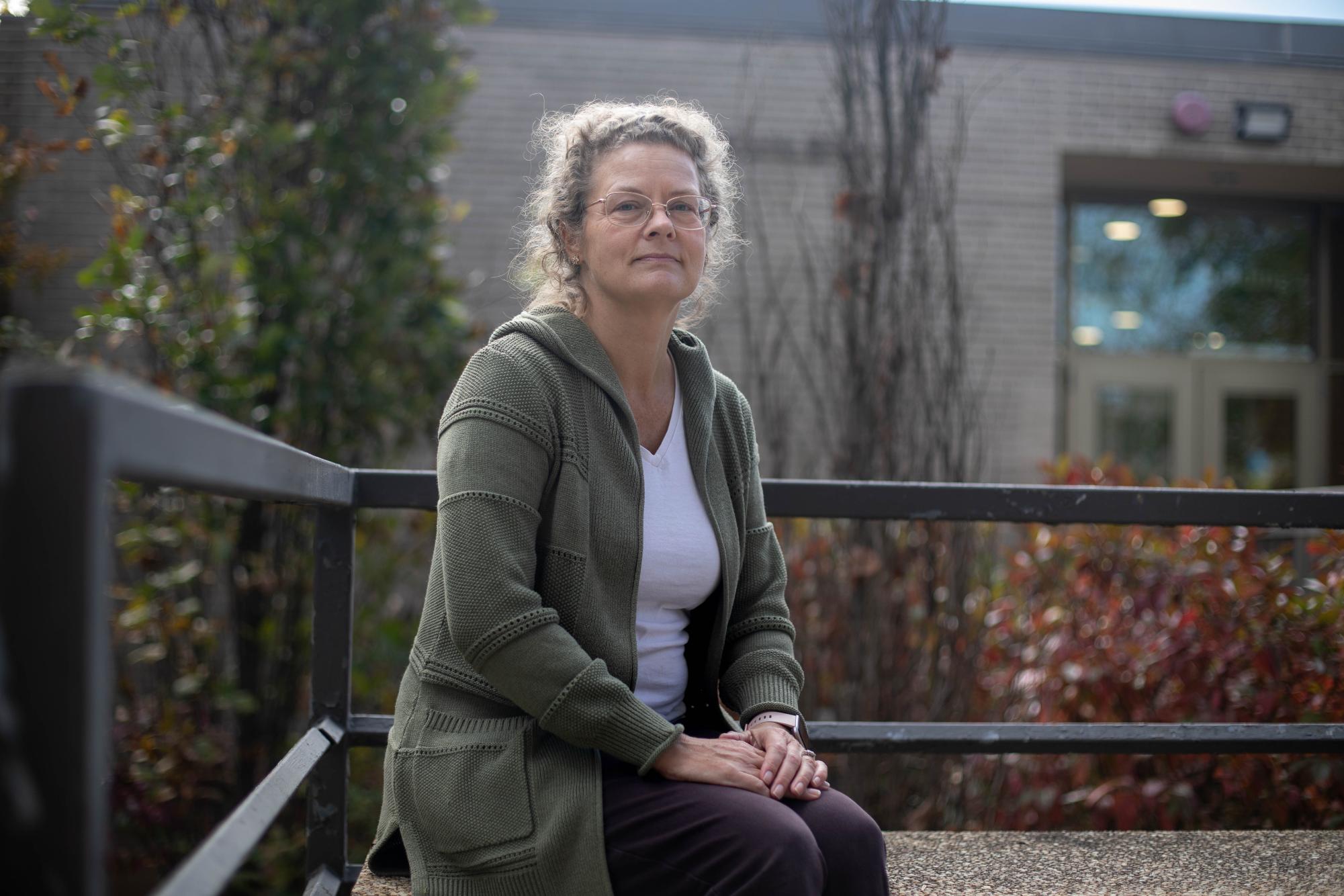
In her Taylor Swift economics class, Professor Kara Reynolds saw a trend. Though men fill the seats of many of her classes, she said around 90% of her students in the Fall 2024 class were women.
“To have that opportunity to talk about economics in a room full of women is so unique for me as an economics faculty member, and it’s exciting,” Reynolds said.
The class spawned from the economics department’s student design course competition, which launched in January 2024, according to a Sept. 11 article on American University’s website. Each student who participates in the competition designs a one-credit economics course, and one of those courses will become a class students can take. For the past three semesters, Reynolds has taught the winning class.
Reynolds said the economics department created the program to give students the opportunity to cover topics that aren’t explored in the economics curriculum.
“The idea was we really wanted to engage students in economics and make them realize that economics is all around them,” Reynolds said.
This semester, that course was Economics of Immigration. She said she taught the Taylor Swift economics, or Swiftonomics, class over the two semesters before.
In the contest application, members of the economics department’s undergraduate studies committee ask participants to explain why students would be interested in taking the proposed class, Reynolds said. The committee then chooses the winner, with a student advisory board giving comments on the proposals, she said. Reynolds said the committee members chose Swiftonimics and the Economics of Immigration because they were topical.
Finalists then give a presentation on a course catalog description and an outline of topics covered in the proposed class.
After the course is selected and before the date the course is set to begin, Reynolds said most of her time is spent reading material for the course. She works with the student who created the class to polish it before the course start date and confirms with them that the course being designed remains true to their original ideas.
For Reynolds, one of the biggest difficulties in teaching special topics like Swiftonomics and Economics of Immigration is that she isn’t an expert in those topics.
“I’m almost learning about it at the same time as the students are, just slightly before the students,” Reynolds said. “And I really do want their perspective, like, in some sense, we’re exploring it together.”
Reynold said this can be intimidating as a faculty member.
“To go into a room and say, like, ‘I don’t know everything about this,’ that takes some vulnerability,” she said.
In preparation for the Swiftonomics course, Reynolds said she spent a lot of the summer reading about how the music industry works. Not only were Taylor Swift and the Eras Tour part of the course curriculum, but so was the music industry as a whole, Reynolds said. Industry-related topics included the antitrust investigations against Ticketmaster, streaming services and how artists have changed the way they write music to take advantage of services.
The class had a lot of audio visual components. Reynolds said she spent more time than she would with a normal class to integrate sound clips and video clips.
“It was a little distracting, actually, because it was so much fun to put together,” she said.
Reynolds said faculty members often have preconceived notions about what people of other generations think is important. She said faculty might have different ideas or priorities they think society should be focusing on.
For Reynolds, being engaged with students and their interests changes how she looks at certain topics in her field of expertise. When she noticed more women taking Swiftonomics, for example, she got a better sense of the barriers women face in economics courses.
“They sometimes don’t feel like they can get their voices heard in the economics classrooms because there are more vocal classmates, male classmates, for example,” Reynolds said. “And so it does change my perspective. I’m on the lookout now to make sure that classrooms are more inclusive and everyone gets their voices heard.”
This, Reynolds said, is what motivates her to teach topics like Swiftonomics. While she doesn’t expect everyone to love economics, she said she does want students to have the tools to take economic evidence into account when making real life decisions.
Both Swiftonomics and Economics of Immigration don’t have prerequisites, and that attracts non-economics majors. No prerequisites for these courses means students don’t need a basic framework of economics to the classes. Reynolds said this sets them apart from regular economics courses.
“When you’re taking macro, we do try to use real life examples,” she said. “Sometimes they don’t translate as well to students like I was saying, because the faculty might have outdated perceptions of what the industry is like. Applying it to an example that the students are really interested in makes it come alive for them.”
The department doesn’t make these classes recurring topics to ensure new topics are explored, but they can be repeated. She said she taught Swiftonomics for two consecutive semesters because the class was in high demand.
“If they were recurring, it wouldn’t allow for this constant evolution of exploring new topics,” she said.
The competition was initially intended for undergraduate students, but one finalist from the last round of submissions was a Ph.D. student who proposed Baseball Economics, which he will teach in Spring 2026, Reynolds said.
In Baseball Economics, Reynolds said students will dive into the sports industry and how players are paid. She said sports economics is a popular class typically taught at other schools, but not at AU. She said it’ll be interesting to learn about how economics can also be applied to our hobbies.
But course ideas can also get to the heart of the challenging, cultural questions affecting economics. Reynolds said she has aimed for the immigration economics class to focus on ethical issues associated with immigration.
“You can’t talk about it without talking about the ethics,” Reynolds said. “I also want students to know the economic research about what’s the actual impact of immigration on an economy so that they can be informed.”
Reynolds said she believes everyone benefits from learning even a little bit about economics because it shapes their everyday lives, even if we might not realize it. For instance, she said she’s constantly thinking about how economics impacts job markets and the development of artificial intelligence.
Reynolds said understanding economics offers students a different perspective when trying to answer some of those bigger questions. She said she encourages students to dive into something new.
“Explore what classes are available to you, because you never know what you might find and fall in love with,” Reynolds said.
This article was originally published in Issue 37 of AWOL’s magazine on November 17, 2025. You can see the rest of the issue here.
Edited by Kate Kessler, Will Sytsma, Caleb Ogilvie and Kalie Walker.