
Weeds are a serious problem at the Anacostia Community Boathouse.
The boathouse, run by volunteers and a single part-time paid employee, is home to eight rowing and paddling clubs who store their boats there in between practices and regattas, according to its website. It sits on the Anacostia River’s western bank, a short distance away from Congressional Cemetery and the John Philip Sousa Bridge.
Underneath the walkways connecting the boathouse’s plaza to its docks is a sunken stretch of green wetland carpeted with reeds, clovers and flowering vines.
The roughly-20-foot strip of ground is a bioswale: a trench planted with flood-resistant flora, designed to slow and filter stormwater runoff before it can overwhelm drainage systems and surge into bodies of water, according to the boathouse’s website.
The boathouse’s bioswale, like the rest of Washington’s local ecosystem, is under threat from litter and invasive species, two conservationists told AWOL. Battling to maintain the bioswale’s biodiversity, the boathouse’s board has enlisted its members to weed out invasive species before they spread, one said. Volunteer rowers, including members of American University Club Rowing, said the work connects them to the sport and the boathouse itself.
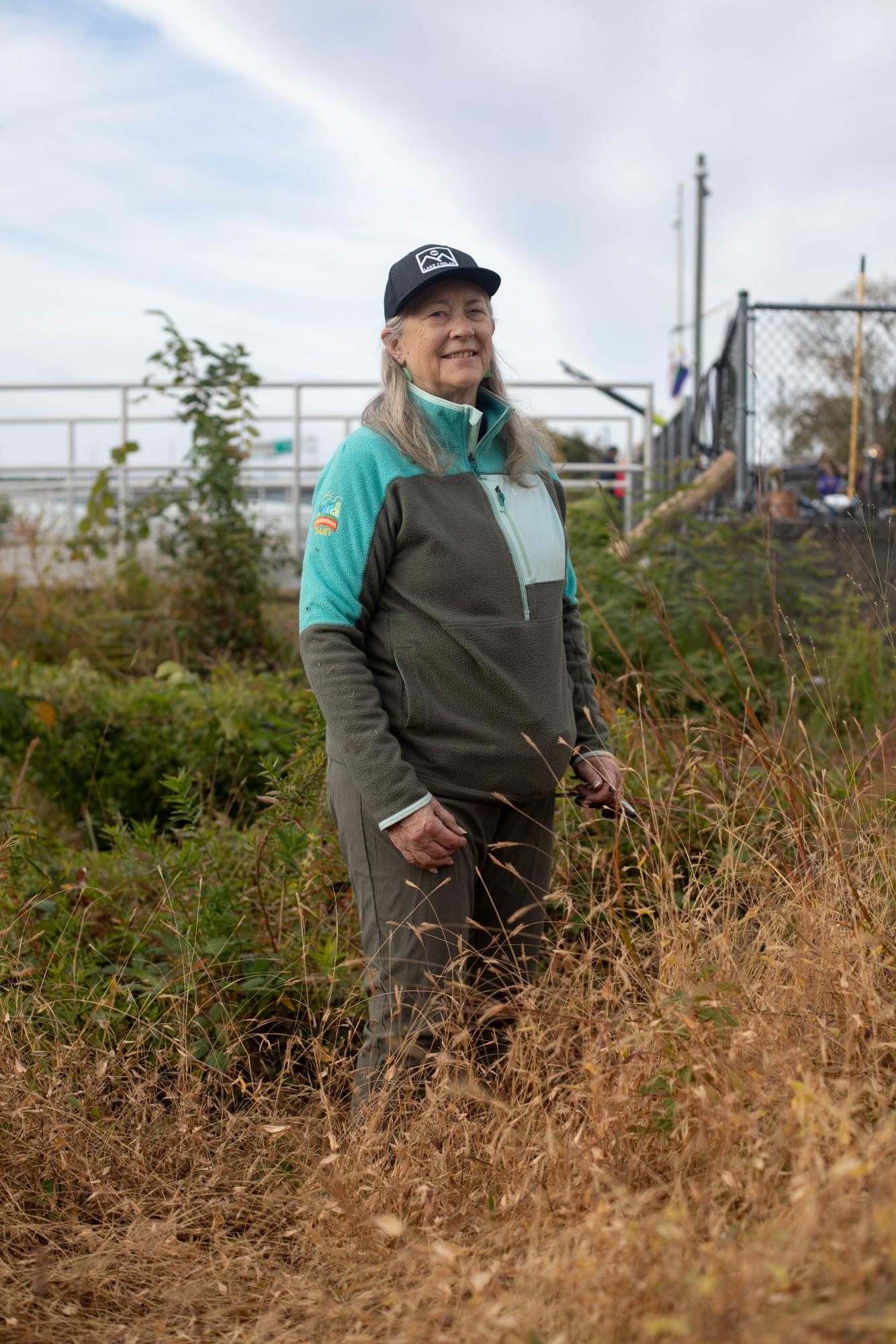
Mary Ellsworth, a volunteer environmental captain at the boathouse, has led members on work days for cleaning the bioswale. She said the work prevents invasive species from harming native species that have evolved together to form an interconnected system.
“When you disrupt that system, you lose that continuity and you lose diversity,” Ellsworth said. “What we’re talking about is a healthy diversity in the ecosystem, and when you lose that, everything starts to fail, and you’re going to end up with collapse, ecological collapse.”
Ellsworth said the native plants also help mitigate stormwater runoff.
“The plants there help stabilize the soil and therefore create a layer of vegetation, dead vegetation and so on,” Ellsworth said. “All of that helps to slow the water and capture it, which allows it to be filtered.”
The board of the Anacostia Community Boathouse Association ruled in 2024 that each rowing and paddling club using the boathouse must participate in work days to help clean the bioswale, said Ellsworth, who sits on the board. The board previously struggled to recruit volunteers for work days, she said.
Now, Ellsworth said, members of the boathouse’s clubs wade into the bioswale on monthly work days, in addition to their schedule of rotating chores.
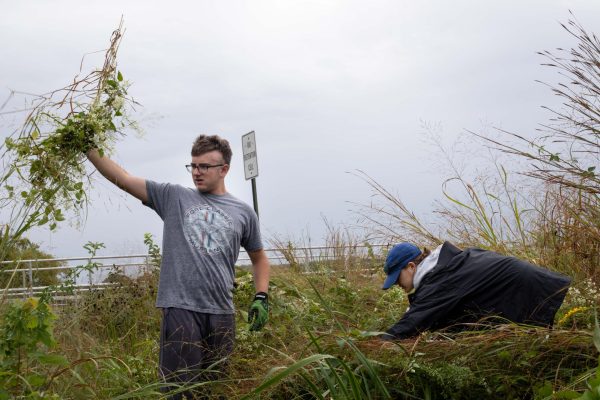
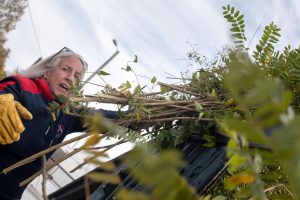
On Sept. 7 and Oct. 26, rowers armed with gloves and clippers picked up litter and pulled invasive plants into the bioswale. They shoved the refuse into a dumpster, then a volunteer climbed into it to stamp the pile down.
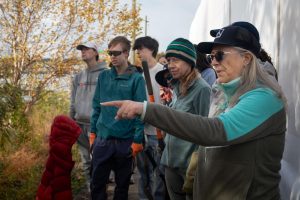
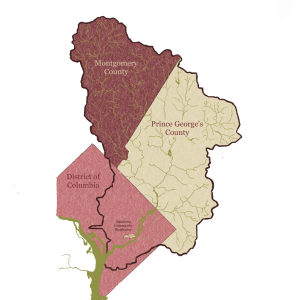
Ellsworth greeted the volunteers, took them to a toolshed and opened its doors, revealing a map of the Anacostia River Watershed. She explained to them the boathouse sits inside the watershed, which covers large swathes of Montgomery County, Prince George’s County and Washington. When anyone in that watershed throws litter onto the road, she said, the litter ends up in streams, then the Anacostia River, eventually landing in the ocean.
“It’s a large moving system with many parts and that litter causes havoc,” Ellsworth said.
Litter harms the environment by amassing on the ground and in the river, blocking thoroughfare and preventing plants from growing, Ellsworth said. Once, when she was on a rowing sweep, she said a raft of litter kept her from going down the river.
“We had to take a very dangerous route underneath a bridge where we weren’t supposed to go,” Ellsworth said. “But we couldn’t get back to the boathouse otherwise.”
Jorge Bogantes, a restoration program manager at the Anacostia Watershed Society, said green infrastructure like the bioswale helps offset recent forest canopy loss by capturing litter, sediment and other pollutants. The loss of greenery and rising sea levels contribute to a sort of “death by a thousand cuts,” he said.
“We need the solution by a thousand band-aids,” Bogantes said. “And green infrastructure is great for that, because we need to tackle it all over.”
Bogantes said invasion often begins when garden stores import species from Europe and Asia, which can then escape into the ecosystem. Seeds and fragments can also travel through the watershed, spreading the plants, he said.
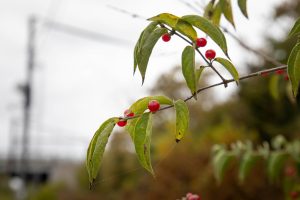
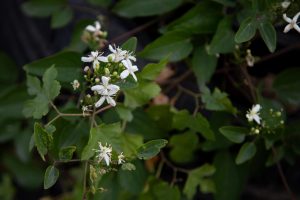
Ellsworth said invasive species at the boathouse include sweet autumn clematis, a flowering vine difficult to uproot; bush honeysuckle, a tall shrub fruited with juicy red berries; lespedeza, a flowering clover and lesser celandine, a vernal yellow flower that carpets the ground, blocking native ephemeral plants from growing in the spring.
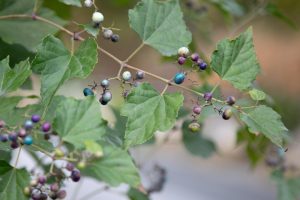
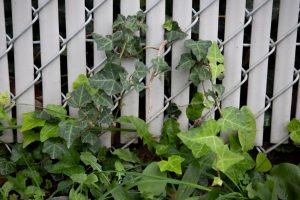
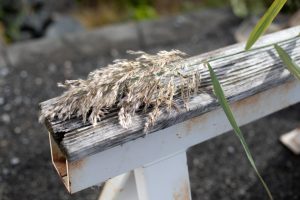
On Sept. 6, a team of rowers from Bishop Ireton High School in Alexandria, Virginia, came to the boathouse to attack these invasive species on the bioswale, along with some of their parents and their coach.
Steve Hall, head coach of Bishop Ireton’s rowing team, said it was the team’s second time working on the bioswale. He said it makes the rowers more invested in the sport, in addition to supplying them valuable community service hours.
“Rowing is a sport that’s very time consuming,” Hall said. “Lots of practices, long practices, but it’s a team atmosphere, and when you work together and do other things besides just rowing, it makes you more invested, more a part of it.”
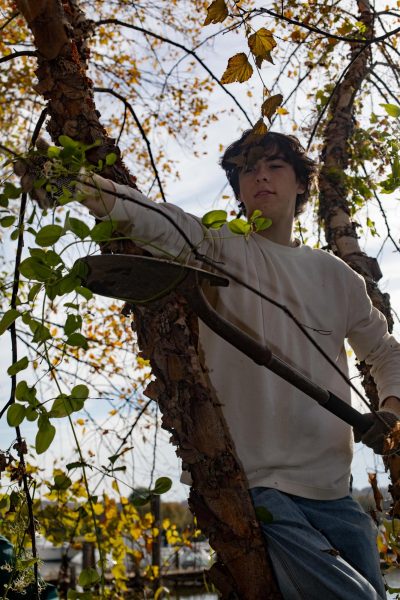
The boat house is around a 35-minute drive from the Catholic high school in Alexandria, Hall said. Combined with time spent on the water, rowing requires smart time management on top of being physiologically demanding, he said.
Coaches are teachers, Hall said. He said the work days are a part of the rowers’ education.
“Most kids just think, ‘Oh, it’s water, it’s a river,’” Hall said. “But when you learn that there is a watershed and how it is all interconnected, and then we can take the service hours to make it better, that’s education, and I think that’s really important for the kids.”
AU Club Rowing, another member organization, started volunteering at the boathouse in October.
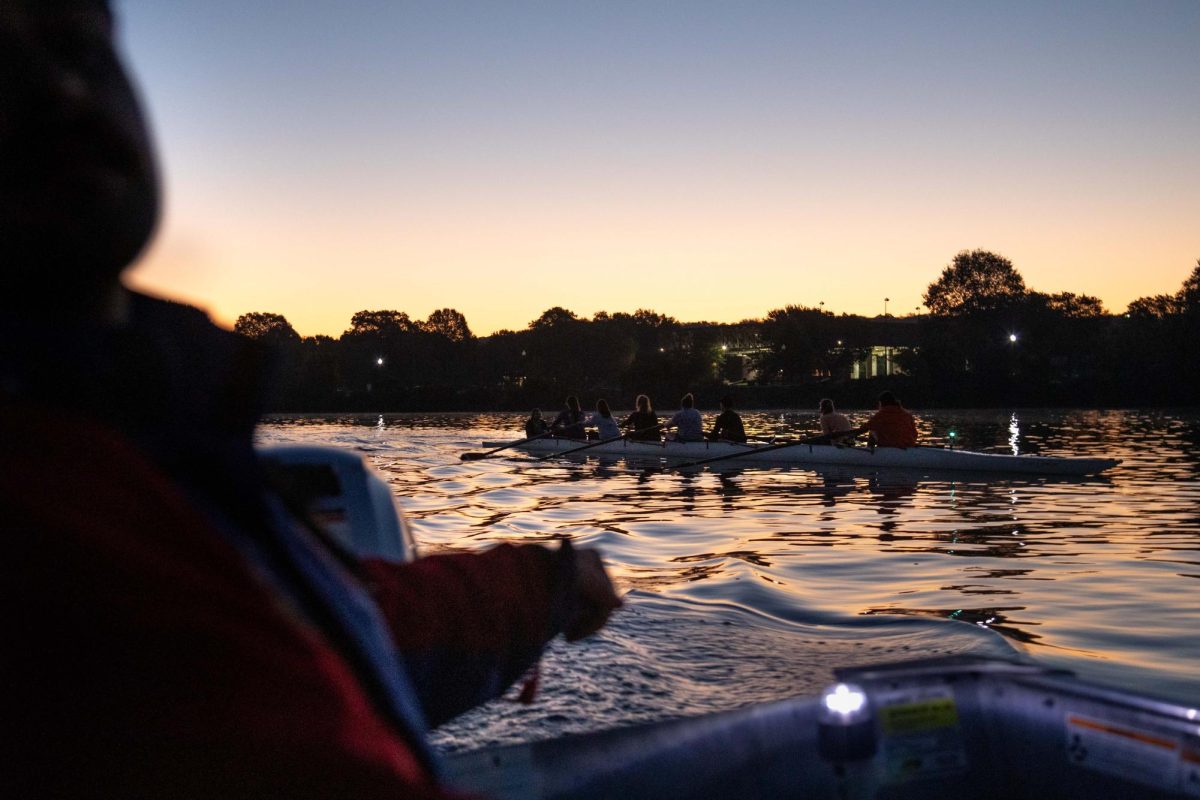
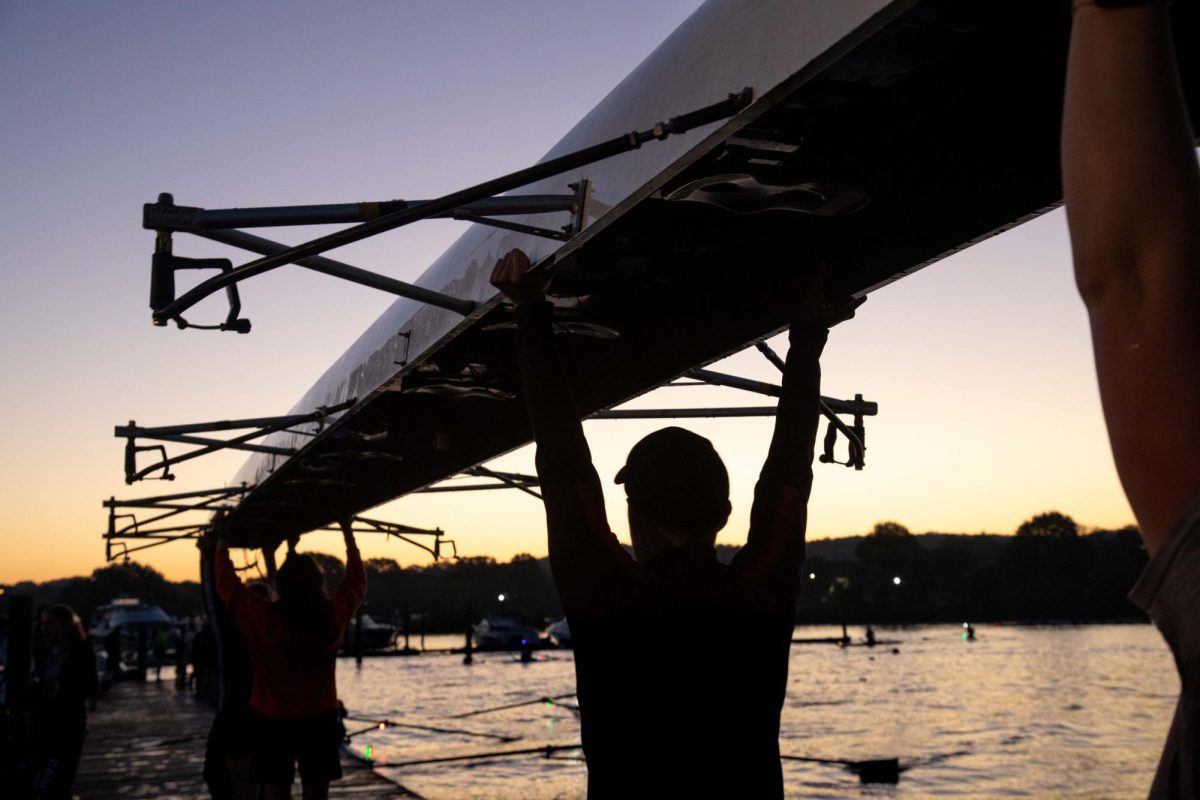
On Oct. 6, the rowing team stored its boats at the boathouse, leaving campus at 5 a.m. for a practice that finished before sunrise. Jorge Galindo, the team’s head coach, said the boathouse community does its part to keep the river clean. He said he would like if the river were safe to swim in, considering how the team’s seniors have a tradition of jumping into it.
“It’s getting cleaner,” Galindo said. “It’s slow and steady. I’d like it to be swimmable, and more people interested and more activity on the water, but you know.”
Recent conservation efforts have improved the river’s ecological situation, Ellsworth said. She rowed at the boathouse for 10 years, during which she started volunteering to maintain the bioswale.
“When I first rode on the Anacostia, we would regularly have alerts that the river was, after a storm, very highly contaminated, and we would often see, we sometimes saw raw sewage going down the river when we were out on it, and it was frequent,” Ellsworth said. “Since the big tunnels have been put in, those alerts, I don’t know when there’s been one this year.”
In addition to the boathouse’s efforts, Ellsworth said expansions to Washington’s sewers and local conservation organizations have helped reduce litter and sewage in the water. The city’s RiverSmart program, which, according to its website, provides financial incentives for homeowners to install green infrastructure like rain barrels, rain gardens and green roofs, has also mitigated flooding, she said.
The bioswale is outperforming targets for native species coverage and has surpassed the Anacostia Watershed Society’s benchmark of 40% native species ground coverage, Ellsworth said. Having only small pockets of native species can still benefit local animals, she said.
Ellsworth said fighting invasive species is a discouraging business. When she tried to tell her neighbors why they shouldn’t keep invasive plants in their yards, they questioned why it was necessary, she said.
“For people who are nature lovers and know the environment, it’s almost painful to walk through green areas that you notice are all invasives, and they are in most places along the river,” Ellsworth said. “Or many places, it’s all invasive species. And it’s really hard to, you know, other people are out enjoying all the green because they don’t see them. They don’t understand the system that way.”
Some invasive plants, like lesser celandine, are “just unbeatable,” Ellsworth said. Lesser celandine is very difficult to dig up because of tubers on the roots that release seeds when dislodged, she said, leading her to consider using alternative methods like butane-powered weed torches.
“We’re thinking about getting a flame thrower,” Ellsworth said, laughing.
Correction: Annacostia Community Boathouse has eight rowing clubs and paddling clubs. A previous version of the article erroneously said there are eight rowing clubs.
Edited by Ben Austin, Kate Kessler, Will Sytsma, Caleb Ogilvie and Kalie Walker.