
Trump’s Takeover of Local Police Was New. D.C. Police Departments’ Rocky Relationship with Black Residents Wasn’t.
Content warning: This article discusses police violence against Black people. Discretion is advised.
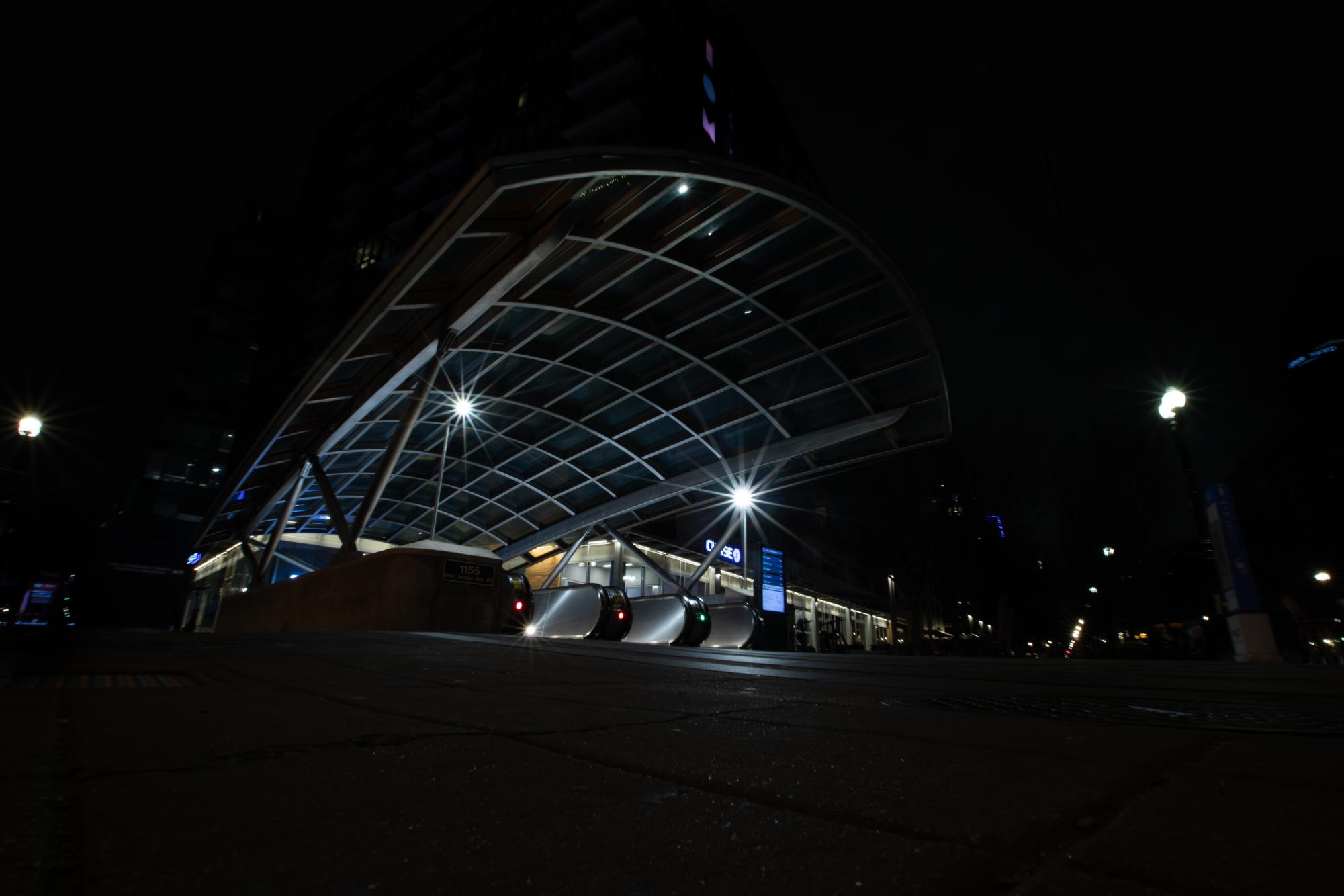
Five days after President Donald Trump took control of Washington’s Metropolitan Police Department, the abolitionist organization Harriet’s Wildest Dreams posted an Instagram video of a Metro Transit Police Department officer stopping Afeni Evans. The officer crossed the Navy Yard Metro station faregate and accused her of fare evasion, the video shows. Evans argued that she had scanned her pass.
“Get the f— out of my face,” Evans said.
Soon after, the officer and another MTPD officer grabbed Evans, who is Black, and threw her to the tile floor. One officer grabbed their pepper spray and deployed it at Evans. She lay on the ground as the officers handcuffed her.
MTPD posted a statement the day after on X, writing that it stopped a 28-year-old at Navy Yard Metro station for fraudulent use of a Kids Ride Free card, which it said wouldn’t be tolerated.
Washington Metropolitan Area Transit Authority’s media relations team did not respond to a request for comment.
Frankie Seabron, the program manager of Harriet’s Wildest Dreams, said she was part of a group at the station that was filming the police for accountability when officers forcefully detained Evans. She said that though around 20 federal officers surrounded the scene, it was those usually assigned to patrol the district who escalated the situation.
“The people who seem to be doing the agitation are the local police,” Seabron said.
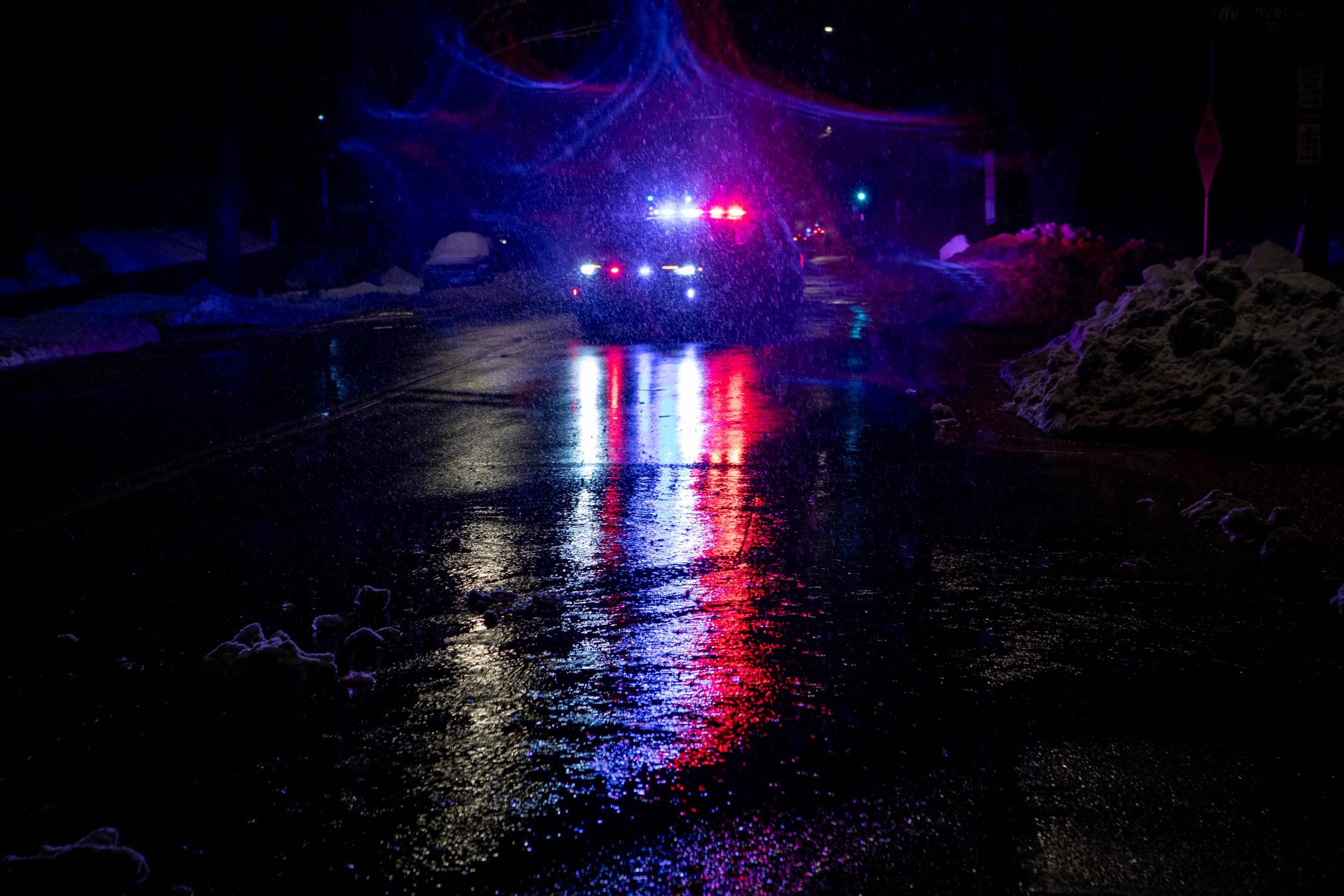
On Aug. 11, 2025, Trump federalized MPD and deployed federal law enforcement agents to the city’s streets under Section 740 of the Home Rule Act, which requires the mayor to give the president control of MPD in emergency situations, at the request of the president. Over the month that MPD was under federal control, some TikTok and Instagram accounts posted videos of MPD and MTPD officers stopping, searching or arresting Black people.
Seabron and other advocates said some Black residents’ apprehension toward local law enforcement isn’t new. Fears of facing unwarranted force and constitutional violations at officers’ hands rose during the federalization, advocates said. Still, local police have long had a rocky relationship with the city’s majority-Black communities, those advocates said. Race and income already played a role in how MPD officers treated people before the federalization occurred, they said.
From 2020-2024, during former President Joe Biden’s administration and before Trump’s federalization, 85% of the subjects in MPD officers’ reported uses of force were Black people, according to AWOL’s analysis of MPD’s use of force data. Comparatively, Black people made up around 41% of Washington’s population in 2020, according to data from the United States Census Bureau.
Data from 2025 isn’t yet available, meaning it’s unknown how MPD’s operations during the federalization compared to years past. MPD’s Office of Communications office didn’t respond to a request for comment. The White House Office of the Press Secretary did not respond to a request for comment.
Andrew Clarke, a civil rights attorney who defended Evans, said that during MPD’s federalization, more people than usual came to him with complaints that MPD officers had used more force than they should have. But he said it wasn’t by much. Officers using excessive force isn’t new, he said.
MPD allows officers to use a certain amount of force to arrest and search people, to prevent harm to people or property and to respond when people resist them, according to the listed “Use of Force Principles” on MPD’s Use of Force Overview document. If officers use force beyond what a court deems reasonable, they use excessive force, which can be a constitutional violation, according to the overview’s fifth section.
“The excessive force used by police unfortunately, is something that we’ve been dealing with for a while in the district,” Clarke said. “So, although, yes, there’s been an uptick in excessive force, it’s not necessarily something that’s a significant increase in our caseload.”
As a Black person and a Maryland resident, Clarke said he feared entering the district during the federalization. He said he isn’t typically concerned about his interactions with police officers, but he ditched driving his car into Washington and instead used the Metro or an occasional rideshare.
“I don’t know if someone’s going to make something up, if someone was going to take me out of the car and harass me or something worse,” Clarke said.
Clarke said people of color became more concerned that federalization authorized police to defy the Constitution, especially its protections against unwarranted stops and searches.
Clarke said people of color’s fears that police officers may break the law weren’t newfound.
“I think that definitely was heightened,” he said. “But there’s always been a fear in marginalized communities of police because of that same reason, of, you know, are they going to trample over your Fourth Amendment rights?”
Seabron said the federalization emboldened MTPD and MPD officers to become more territorial.
“It’s my turf, like I’m gonna show off,” Seabron said.
But Seabron said she thinks Black residents’ trust in local law enforcement didn’t necessarily worsen during Trump’s federalization. Wherever there’s a high concentration of police, she said they tend to target marginalized communities.
“There’s always been mistrust of police in D.C.,” Seabron said. “It’s just platformed now because of this dog whistle of safety.”
Jamila White, the chairperson of Advisory Neighborhood Commission 8A in Southeast Washington, said Trump’s federalization changed MPD’s operations in Washington and how they interacted with residents. MPD set up checkpoints and began arresting people for violations that would have previously resulted in a citation or warning, she said.
“There’s been interactions with MPD and Black folks for years, like complaints, murders, all that type of stuff,” White said. “But there has been a lot of distrust, because certain things that MPD would not do they started doing.”
Antoine Lesesene, an MPD officer and the department’s Fourth District community outreach coordinator, said that MPD didn’t change its procedures or guidelines during the federalization, but concerned residents needed that explained to them.
“We still was led by MPD laws, not more so the federal part,” Lesesene said. “So I was just ensuring them that our policies wasn’t going to change.”
During the federalization, some Black people feared being killed by the police, White said. People feared for their children, she said, especially after Trump called their kids thugs and criminals. (Trump accused “‘local youths’ and gang members” of perpetuating crime around Washington in a Truth Social post six days before he took over MPD.) White said the federalization was an attack on Black and Latino youth and affected societal progress.
“It puts you back as a community and as a society,” White said.
Black residents’ relationship with MPD changed during the federalization depending on whether they were new to the city or a native Washingtonian, she said. It also depended on neighborhood and income.
“It just seems like at least in some of the neighborhoods east of the river, the tensions and the fear of the police got even higher,” White said.
The neighborhoods on the Anacostia River’s east side are home to local culture and history. On Martin Luther King Jr. Avenue sits the Go-Go Museum & Cafe, which exhibits a piece of Washington’s music scene and cultural roots. On Marion Barry Avenue lies the Anacostia Arts Center, which promotes local artists and small businesses.
“It’s a community where people know each other’s names and know their neighbors’ names,” White said. “You actually feel like a community.”
At the same time, those neighborhoods, especially in the city’s Southeast quadrant, are also home to a difficult reality when it comes to policing. Police officers used disparate practices there before Trump’s MPD federalization, White said, and data shows that officers reported using force there more frequently than in areas west of the river.
White moved to the Anacostia neighborhood from Ward 6, an area that is around 56% white and above the city-wide median income, according to Census Reporter’s web page for the area. From what she’s seen across those two areas, White said the quality of government services is largely determined by how the government values an area’s constituents.
“Unfortunately, it seems like we’re valued based on our income, our wealth,” White said. “And those who have higher wealth and higher incomes, they’re valued higher, they’re respected, you know, more. When you call, you get serviced more or you get better service.”
Stretching from the east bank of the Anacostia River to Maryland’s western border, MPD’s Seventh District, one of two MPD districts east of the river, covers an area where people tend to earn lower incomes than in other parts of the city, according to a Department of Health and Human Services overview that used 2024 data. The Seventh District is also composed of majority-Black neighborhoods, according to the same overview.
Each year from 2020-2024, officers patrolling the Seventh District reported using force more frequently than in every other district, according to AWOL’s analysis of MPD’s use of force data. Officers in the Seventh District filed 584 use of force reports in 2024. That’s 38% more than in the Third District, with the second-most reports.
Joseph Johnson, chair of ANC 8B and the vice chair of the Seventh District’s Citizens Advisory Council, a body that connects Southeast residents to MPD, said MPD has worked closely with him anytime he’s voiced concerns on behalf of a resident. Given his own positive interactions with MPD officers, Johnson said data showing how the Seventh District’s use of force numbers stack up shocked him.
“They took an oath to protect and serve and that’s what our residents deserve,” Johnson said.
MPD’s Office of Communications declined an interview with the Seventh District commander. It also declined to comment on the Seventh District data.
Johnson said he thinks officers’ perceptions of Southeast Washington influence how they treat residents east of the river. Crime is a problem in neighborhoods near his, Johnson said, but crime is all officers hear about.
“I think if you hearing that Southeast is the worst part of the city, you hearing things like, ‘Everything that’s bad comes from Southeast, everything that’s bad comes from Southeast, we get the worse end of everything,’” Johnson said.
MPD’s Crime Cards show that people have committed more violent crimes over the past five years in the Sixth and Seventh Districts than in other districts. That might explain part of the force discrepancy. But people were committing violent crimes under a third of the times when officers used force against them in the Sixth and Seventh Districts, MPD’s use of force data shows. Officers reported using force while responding to violent crimes more frequently west of the river than they did east of it.
For White, race and class issues transcending Washington explain the differences in how officers treat residents in different neighborhoods. White said police target Black people regardless of income level. But among Black residents, people’s wealth further impacts how officers interact with them.
“Just the respect, the way you’re talked to, the interaction is different,” White said. “And it’s not just reflective of MPD. It’s reflective of the greater system in D.C., which is a microcosm of the U.S. You’re treated based on your value and your value’s based on your wealth.”
Johnson said he thinks Southeast Washington’s reputation as poor empowers officers to treat the area’s residents with more force. When people have less money, they’re less able to take legal action to stand up to officers.
“Where are you going to get the money to sue MPD, right?” he said. “Where, if you go up against the government, there’s going to be, there’s just no fighting it.”
Johnson said he hopes that nobody becomes a police officer to mistreat residents. At the same time, he said data and residents’ stories have made him see why some people have lost trust in MPD.
Community organizers who work with MPD said that the distrust during the federalization wasn’t caused by MPD’s behavior but by the simultaneous deployment of federal agents to the city. MPD community outreach divisions have made efforts to improve relations with anxious community members, such as educational events and community walks, Fourth District Outreach Coordinator Lesesene said.
Lesesene said that while some residents expressed concerns about the federalization, he didn’t notice racial division.
The Fourth District is located in an area that is 50.6% Black and 21.8% Hispanic, according to Washington’s Office of Planning Demographic Data Hub.
“It wasn’t about a color thing,” he said. “It was just more so about being available to the community as needed.”
As an outreach coordinator, Lesesene said he speaks with residents about issues directly to help them feel safe interacting with law enforcement. He said he didn’t feel like his district had a problem maintaining Black residents’ trust during the federalization.
“Some people, just, we already had a relationship with,” Lesesene said. “It was more so like trying to create new relationships, to continue to bridge that gap. We gonna continue to push.”
Robert Brannum, an at-large-member of the city-wide Citizens Advisory Council, said he blames the Trump administration for a breakdown in trust.
“It was unnecessary,” Brannun said of the federalization. “It was based on a lie.”
Brannum said he was opposed to the federalization but didn’t see MPD as the reason citizens distrust police. Rather, he said the federalization’s association with Immigration and Customs Enforcement agents and the National Guard, which Trump deployed to the city alongside MPD, caused mistrust.
“ICE agents and the border control people were acting unlawfully, and MPD was the face that citizens went up against because they were the face that was in the street,” Brannum said. “MPD has been put into a delicate position.”
LaTaska Nelson, a reverend and the executive director of Emory Beacon of Light, organized a food distribution event with MPD officers as part of a “Faith and Blue” series of events in October 2025 to connect MPD with residents through religious organizations. Nelson said attendees became nervous when the National Guard troops arrived to the event. MPD officers asked the Guard to leave.
“That’s the one thing that I am grateful for, that our neighbors are comfortable because the officers doesn’t come around like guards,” Nelson said. “They come around as community.”
Brannum also said community policing made MPD more trustworthy than the National Guard.
“We know who they are,” Brannum said. “We see them. They patrol regularly. They work with our young people.”
Nelson said these types of community outreach events give people a chance to know police officers and build trust, even when residents have reasons to be concerned.
“We’ve seen that not everybody wants to protect and serve, not everyone wants to be a community officer,” Nelson said. “So, I wouldn’t dismiss it. I would say, find a support group, someone that you can listen to, develop a relationship and see if you can find some support and figure out ways to kind of calm the anxiety or fear.”
Others are more skeptical. Seabron, of Harriet’s Wildest Dreams, said MPD’s outreach efforts are a form of propaganda. They said communities of color are seeing their people stop and frisked, detained and brutalized.
“When you get on social media, you see things like Coffee With a Cop, or them showing up, or a cop giving a child a $5 bill, as if that’s going to undo decades to centuries of institutionalized racism,” Seabron said. “It doesn’t work that way.”
Clarke, the civil rights attorney, said MPD has always had challenges earning the Washington community’s trust. He said the federalization set back any progress MPD has made in engaging with community members and earning their trust.
“I thought that the police were doing an okay job of building that community trust, but mostly community trust in their truthfulness,” Clarke said. “And I think that now that’s kind of eroded back again.”
This article was originally published in Issue 38 of AWOL’s magazine as “The eighty-five percent” on April 15. Read the issue here.
Edited by Kate Kessler, Ava Ramsdale, Ben Austin, Clair Sapilewski and Caleb Ogilvie.